Address
304 North Cardinal
St. Dorchester Center, MA 02124
Work Hours
Monday to Friday: 7AM - 7PM
Weekend: 10AM - 5PM
Address
304 North Cardinal
St. Dorchester Center, MA 02124
Work Hours
Monday to Friday: 7AM - 7PM
Weekend: 10AM - 5PM
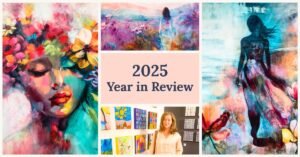
The year I became an artist - reflections on leaving tech, learning to paint, and building a creative life from scratch.
What do you do after you quit your engineering job?
After almost two decades as a software engineer, I left my last tech role wanting something different. I was tired of the tech world, had lost motivation, and was fed up with the lack of autonomy—no matter how much freedom a job offered, it would never be enough. I realized I needed to work for myself, do what I wanted to do. But I didn’t know what that was yet.
So I launched an e-commerce business selling wall art. Quick decision, practical plan: make some money, gain experience, figure out the rest later. Maybe return to tech eventually, build some product. This was the logical next step.
That’s not what 2025 turned out to be about.
Recently – just a month ago – I took an archetype assessment. My dominant archetype: The Explorer. It surprised me. I’d never seen myself that way. But the more I thought about it, the more I realized I’d been suppressing it. Explorers need autonomy above all else. That’s what I’d been reacting to in every job, no matter how good. That’s why I left.
I was about to discover what I was actually looking for.
I lost my father at the end of 2024.
This was one of those rare moments that rewrites who you are. I was no longer the same person. The grief went deeper than losing a close family member – it made me look at life itself more closely, asking what awaits on the other side. I started looking deeper within myself, exploring my spiritual nature, the role of God, how human spirits are connected.
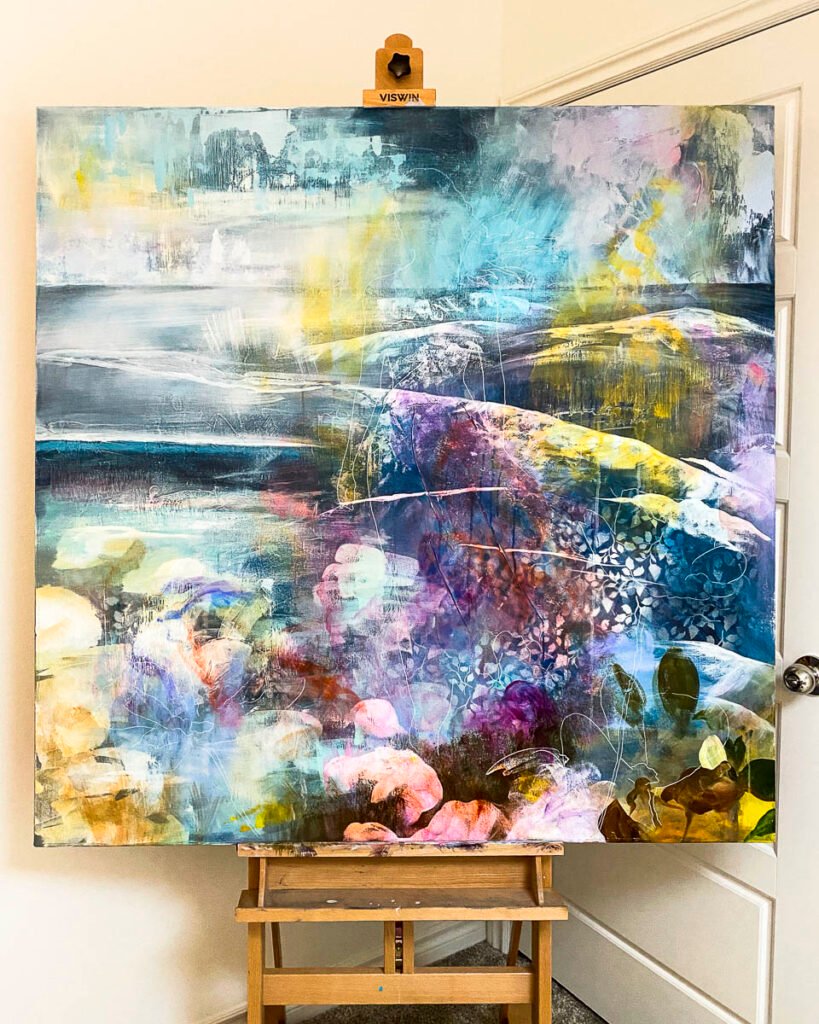
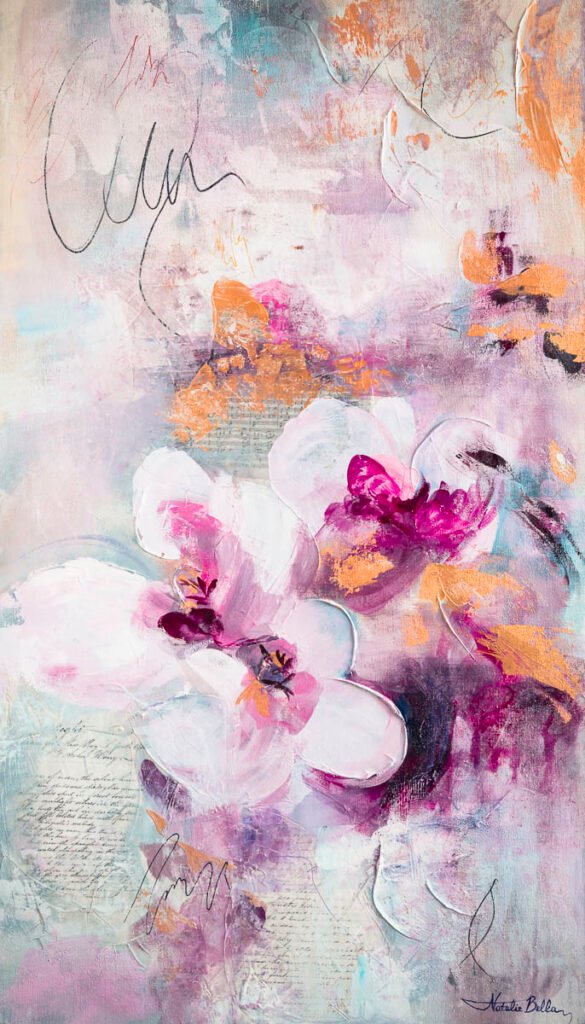
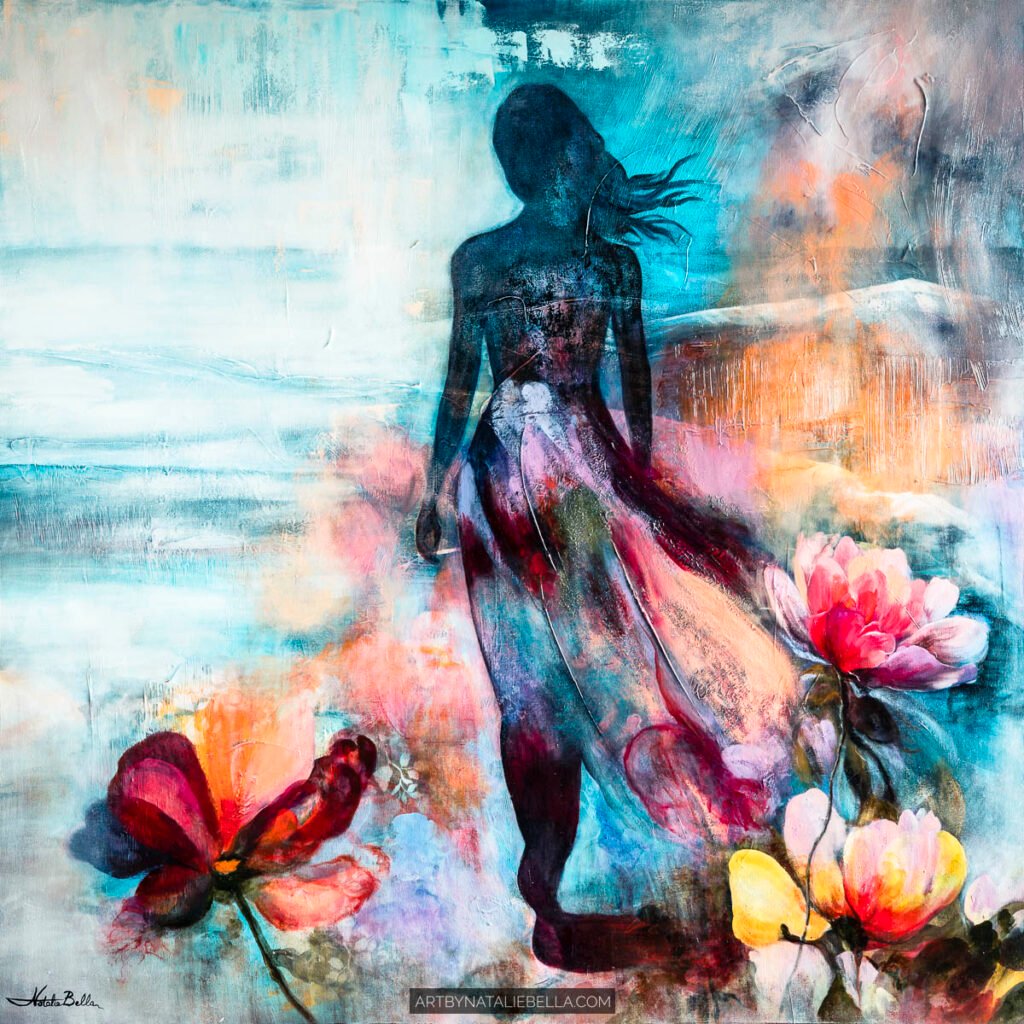
I became more vulnerable. Scared of losing people close to me. The practical concerns that had driven me became unimportant. I started asking what my life was actually about and realized I wasn’t living it fully. I was living one dimension—the practical one—and neglecting the deeper ones.
Art had always been there, but I’d never seen it as a path.
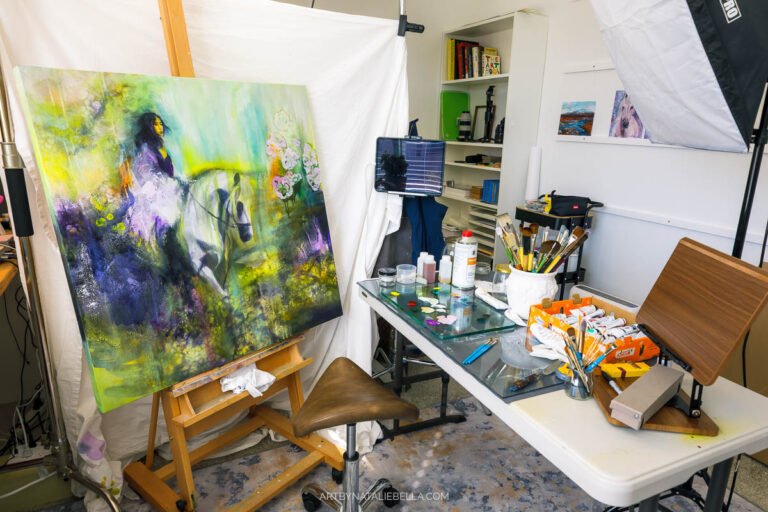
A few days after my father’s death, I created a source for a painting in Photoshop that I called “Father’s Love.” It was a way to channel my grief, to pass the time. I felt I had to do it. I worked on this source for hours over several days, layering various images until I got close to what I’d envisioned: a woman in a forest surrounded by flowers, tall trees in the background with light shimmering through branches. A butterfly in the air, looking at her with gentle love.
I wanted to paint it. But I couldn’t – I didn’t have the skills.
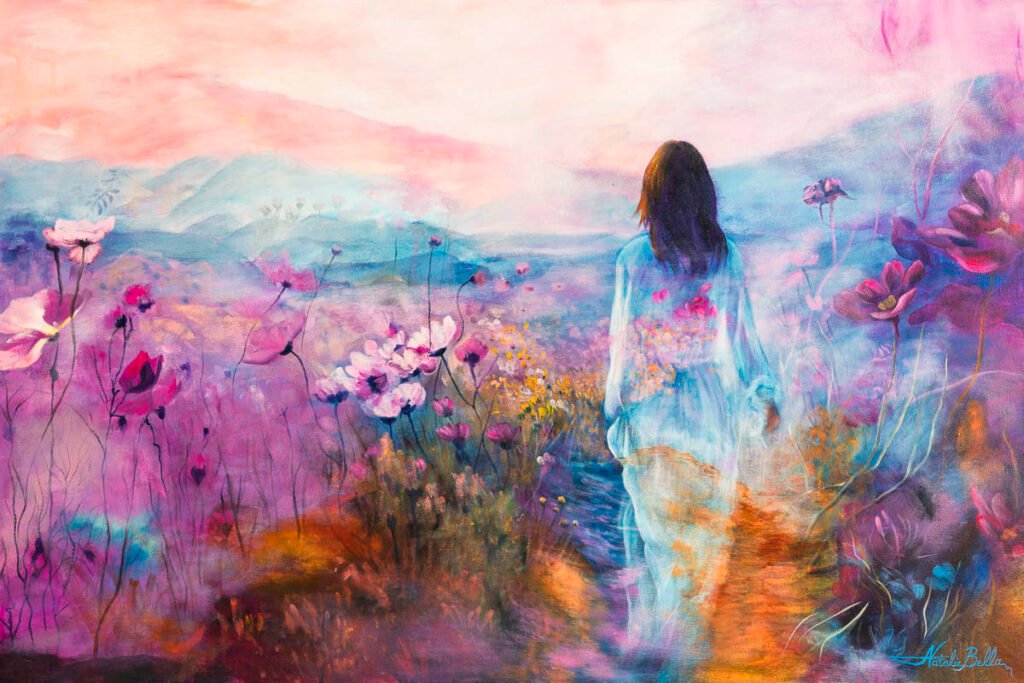
It hit me like a lightbulb moment: I want to paint this. And I can actually learn to paint this. Not just well enough for one piece – I wanted to learn to paint like a professional artist.
At that moment, I didn’t think I’d paint full-time. The starving artist stereotype still loomed large. I just wanted to create the paintings I was seeing in my mind.
But that decision – that single moment of wanting to make something beautiful from grief – triggered everything that followed.
I decided to dedicate two hours every evening to learning to draw and paint. I created a curriculum from online programs and courses. The wall art business still needed attention – the practical side of me knew it had to take priority – so painting would happen after dinner, from 8-10pm.
We moved our family dinner earlier, limited our TV time. It wasn’t always easy. Sometimes I was tired and didn’t feel like going to my studio – it was much easier to keep lounging on the sofa watching one more episode of whatever we were watching.
I knew the timing wasn’t ideal. I was building an online business that needed a lot of attention. I was new at everything, had so much to learn. I was literally running two major initiatives simultaneously. Several times I asked myself if I should be reasonable and pause learning art to focus on growing my business.
But I couldn’t. The pull was too strong.
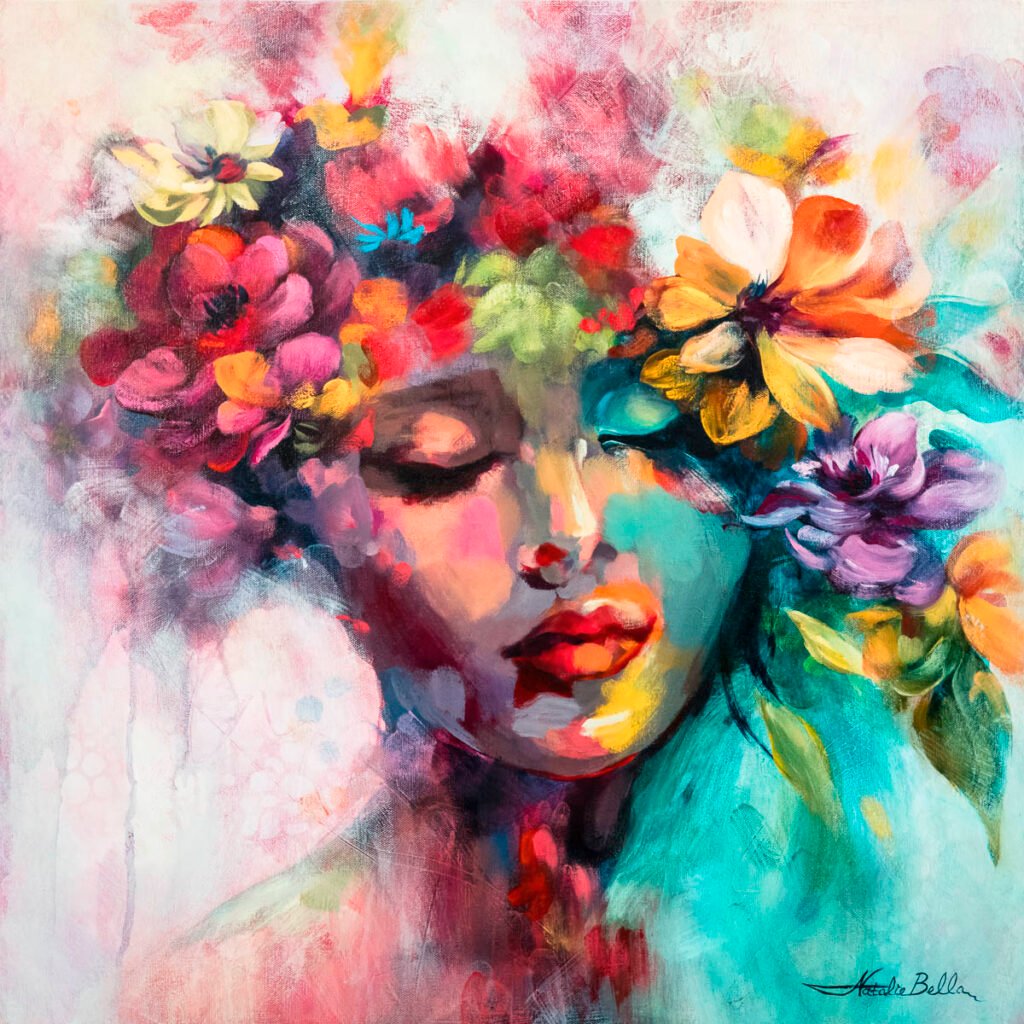
And as I immersed myself more deeply in the art world – learning art history, following other artists, understanding what it meant to create seriously – something shifted. Slowly, quietly, the realization grew: I didn’t just want to learn to paint.
I wanted to be an artist.
My evening painting sessions became my magic moments, my prayers, my connection to the universe and the divine. The tactile feeling of applying brush strokes to canvas, pencil lines to paper – it was more than technique. It felt like I’d opened a dam that had been closed, and the waters that were trapped inside came rushing out.
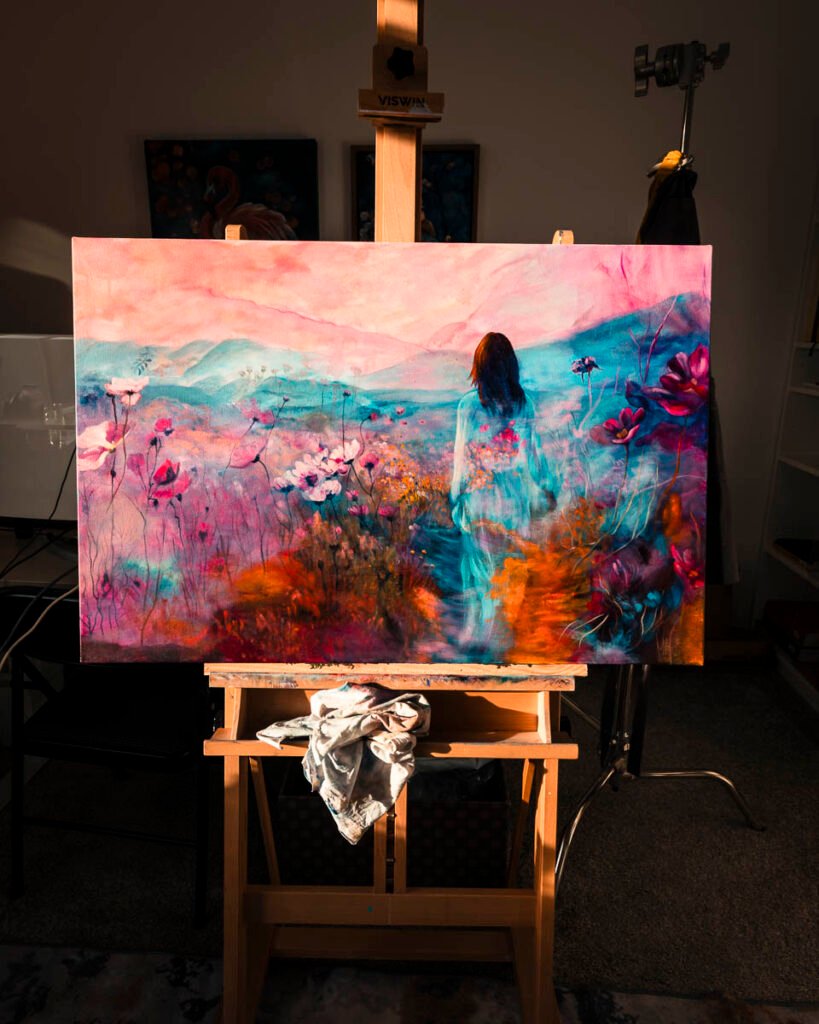
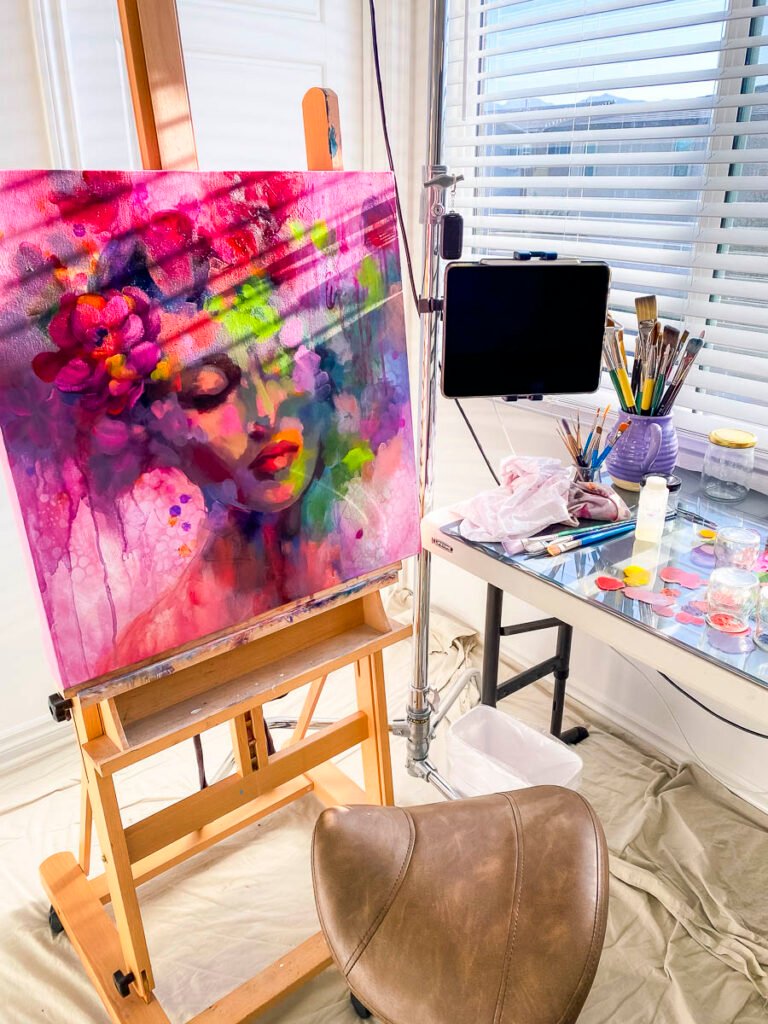
The more I painted, the stronger the pull to do more. I kept a sketchbook on my desk because I’d get sudden urges to paint or draw while doing other work on my computer. Sometimes a visual – a pose, a person’s expression in a video – would make me pause and start sketching immediately.
Slowly, through the process of painting, I started healing.
One thing that surprised me: while I thought I was a complete novice, I wasn’t actually starting from zero.
I had no drawing or painting experience, but I had an unexpected advantage – photography. I’d been a skilled amateur photographer for over a decade. This helped with some of the fundamental elements of art – composition, value, color, focal points. Even owning professional-level equipment – cameras, lenses, light modifiers – meant I could take quality photos of my art, document my work accurately.
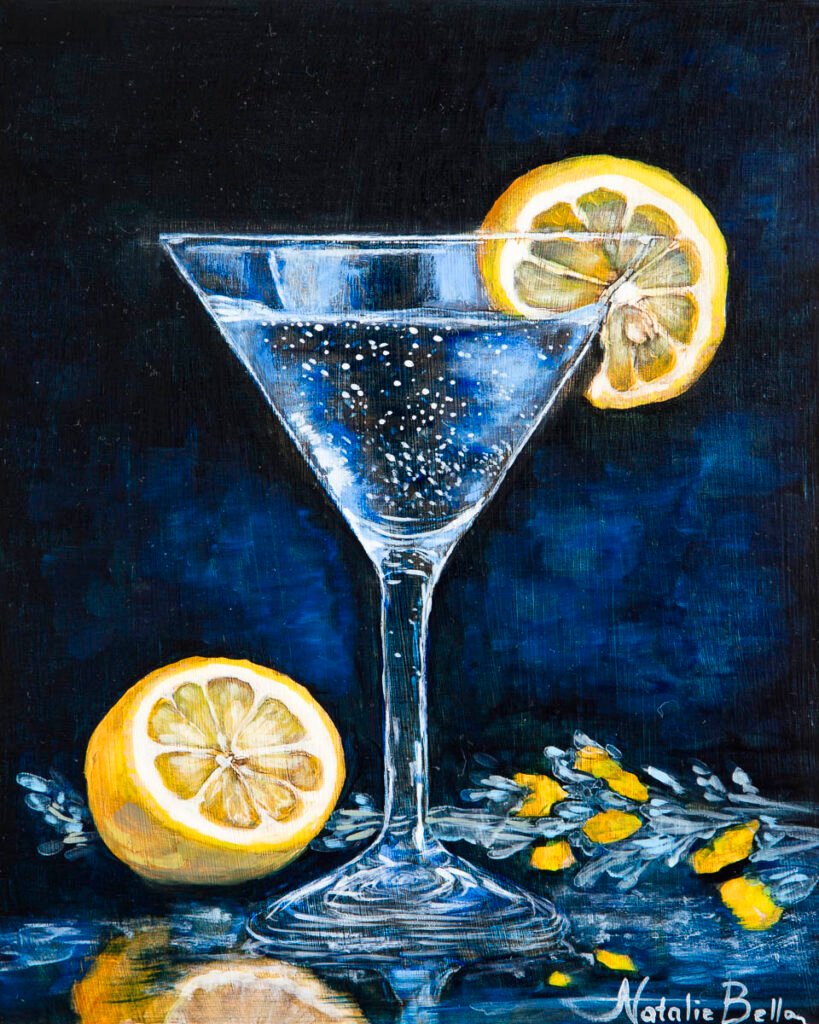
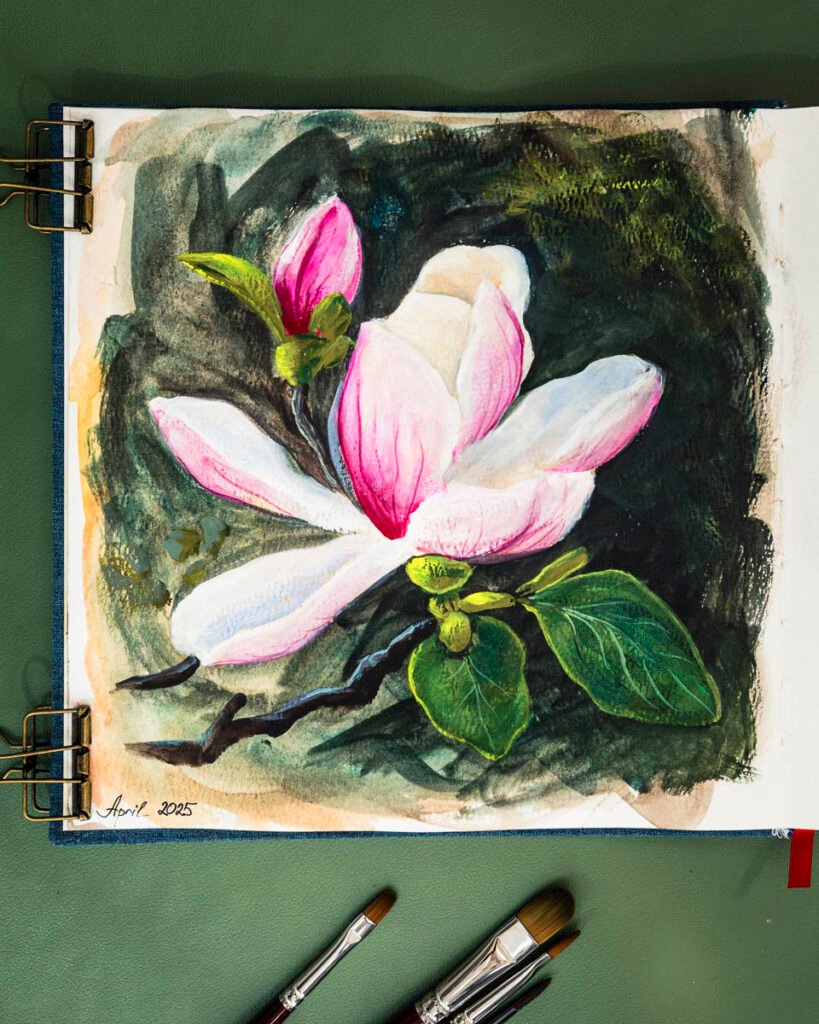
My Photoshop skills, honed over decades, became central to my process. Creating digital sources is an activity I enjoy enormously in itself – it’s part of my creative practice, not separate from it.
I discovered that many struggles beginning artists face – understanding composition, seeing values, balancing color – were things I already had some intuition about. Not because I was naturally talented, but because I’d been training those muscles through photography without realizing it.
My previous creative life wasn’t wasted. It was foundation.
Despite those advantages, I was still learning to paint from scratch. And the engineer in me showed up immediately.
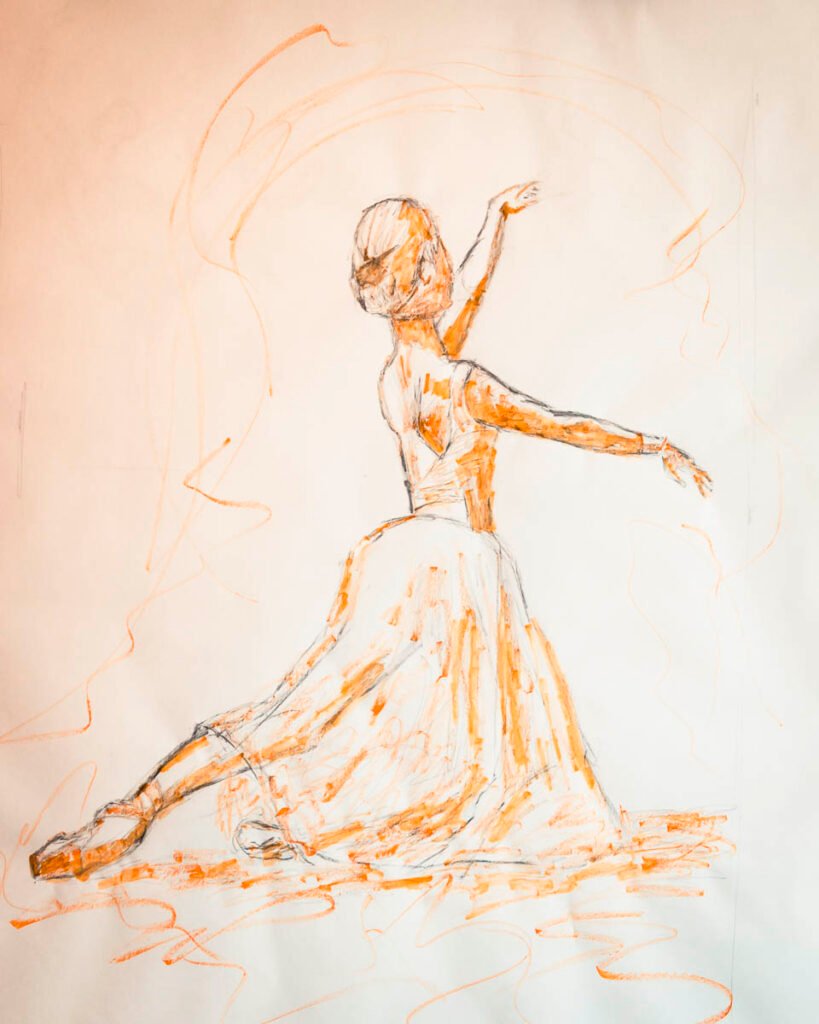
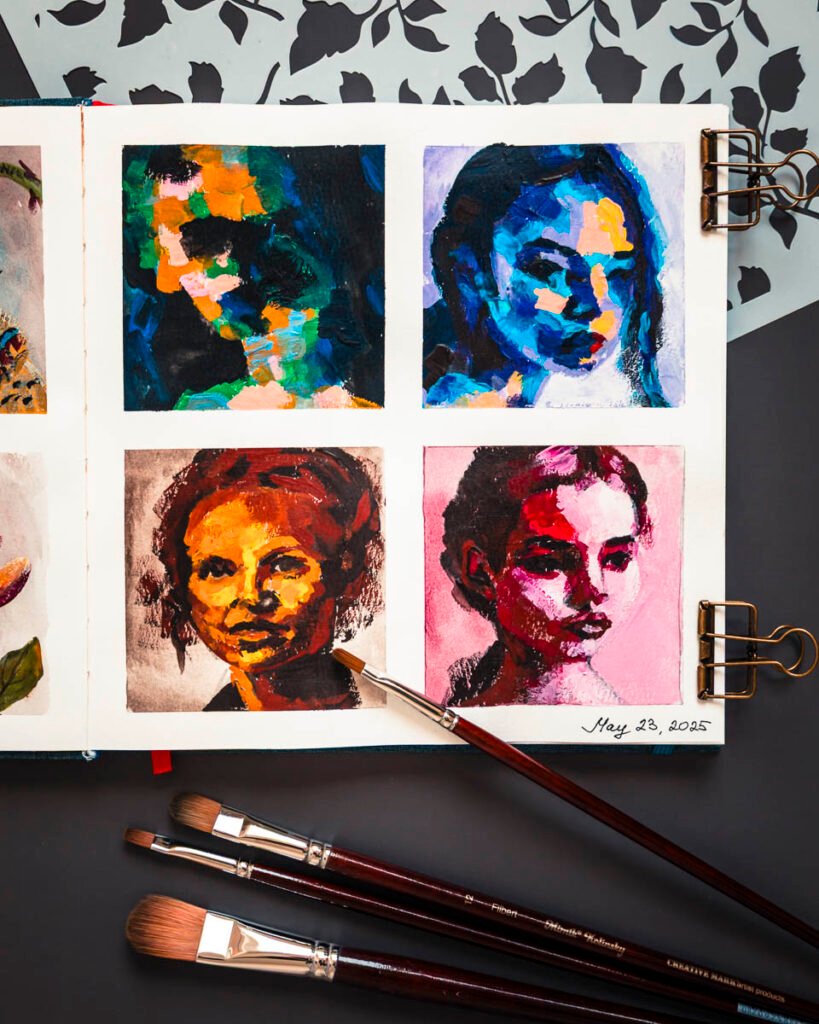
I’m a planner. I don’t enjoy spontaneous art creation without a plan. I almost always start with a source I create in Photoshop, combining multiple images until I have something close to my vision. This is where my digital skills shine – I’ve used Photoshop and Lightroom for decades. Lightroom organizes my photography and my painting sources; Photoshop is where I compose them.
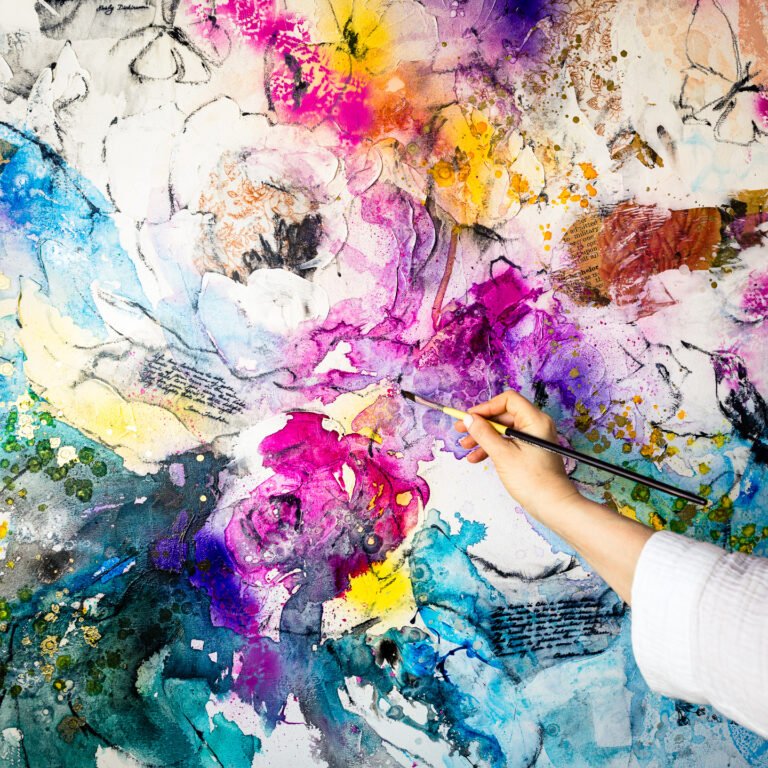
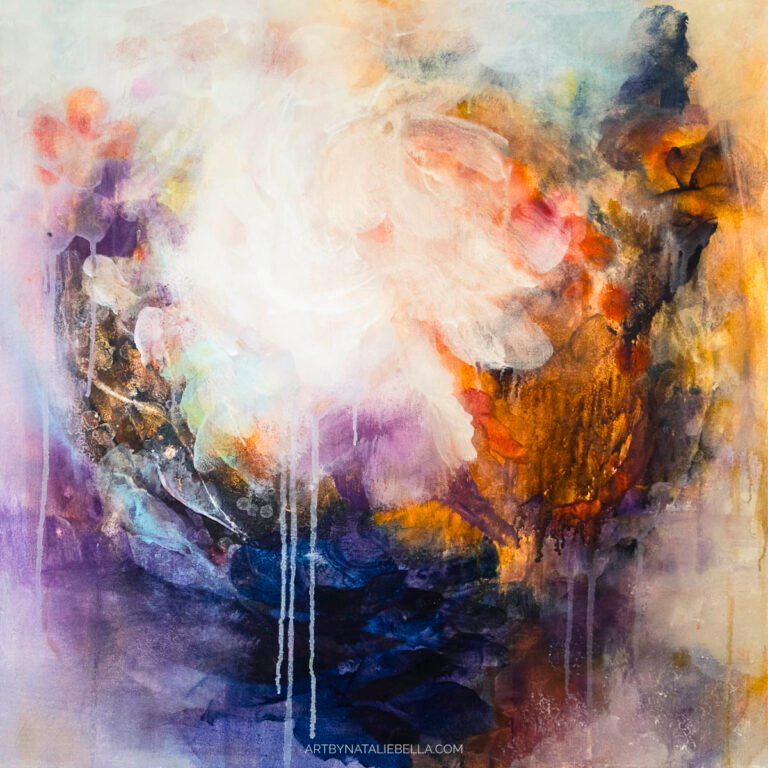
After I have my source, I start painting. I work in layers: beginning with free, spontaneous inks and washes, then building up layer by layer. This creates the depth I love. I always finish with an oil layer—it adds richness to the colors that other mediums can’t quite achieve.
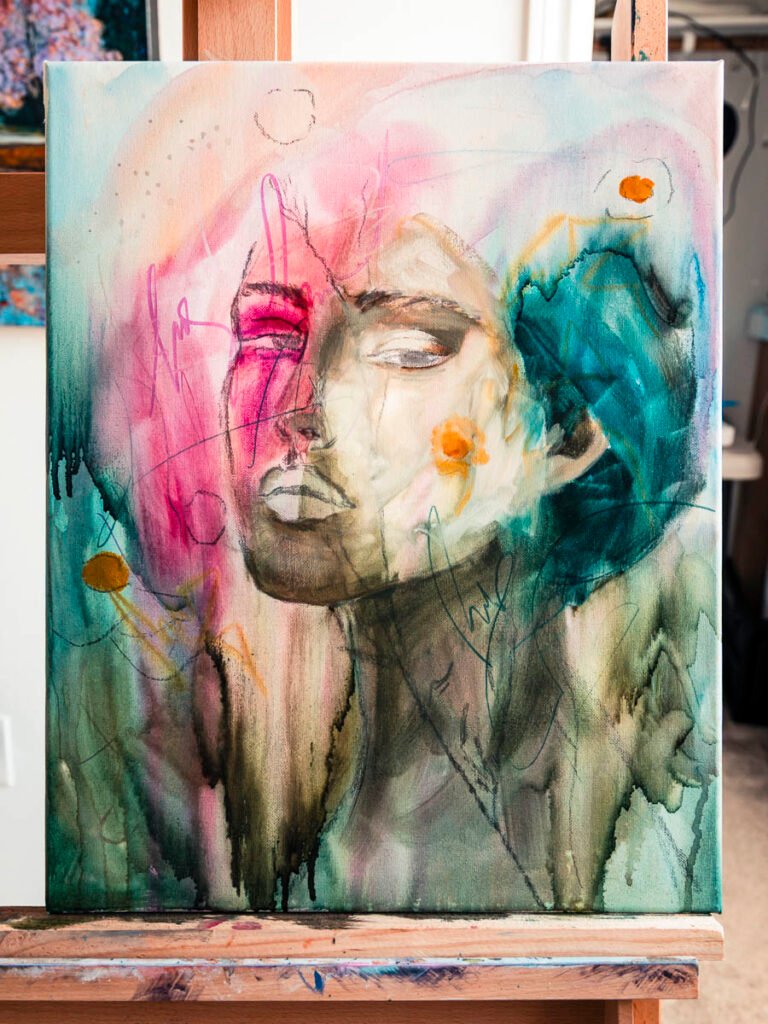
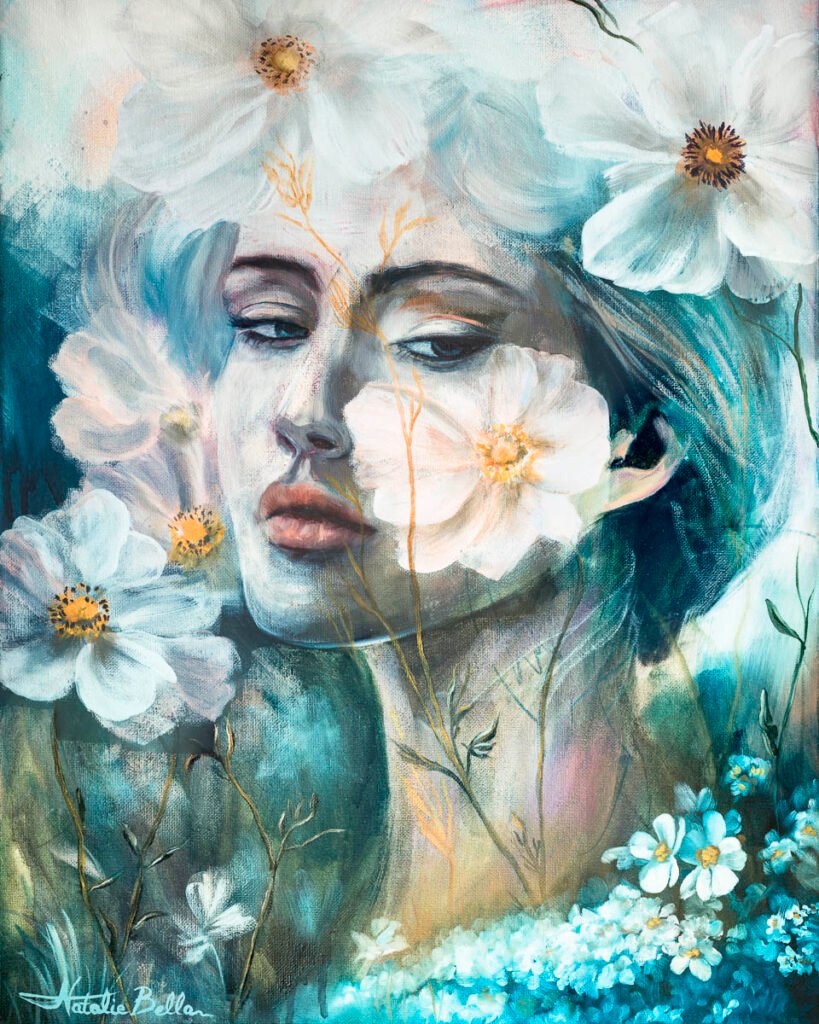
My current struggle: I tend to cover up the earlier layers with that final oil work. I’m learning to leave more of the underlying layers visible, to let the history of the painting show through.
Finding my voice has been about experimentation – trying a wide variety of approaches I’m drawn to and evaluating whether I enjoy the process, not just the result. For example, I like art where spray paint is applied like graffiti, but it’s not my method. If I don’t enjoy making it, it’s not for me, even if I like how it looks.
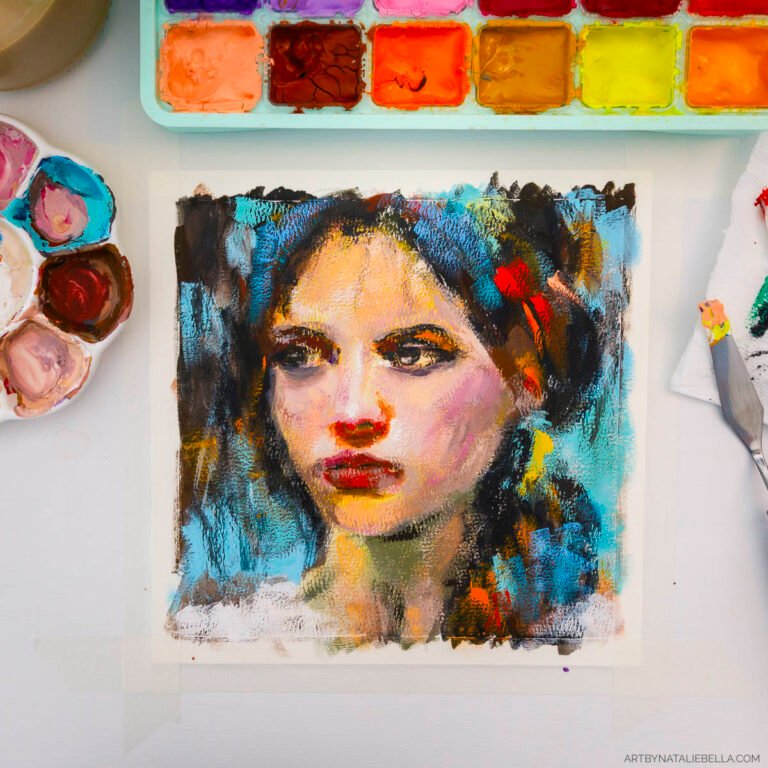
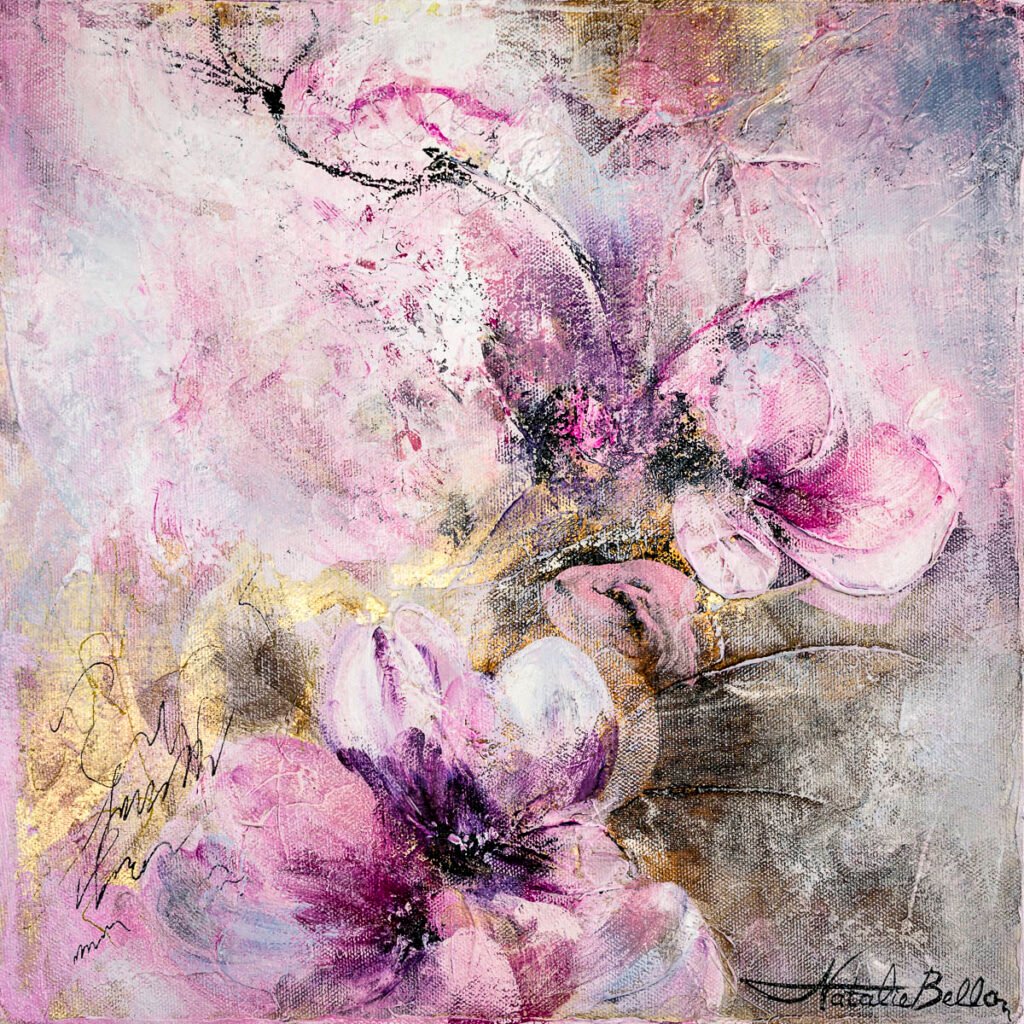
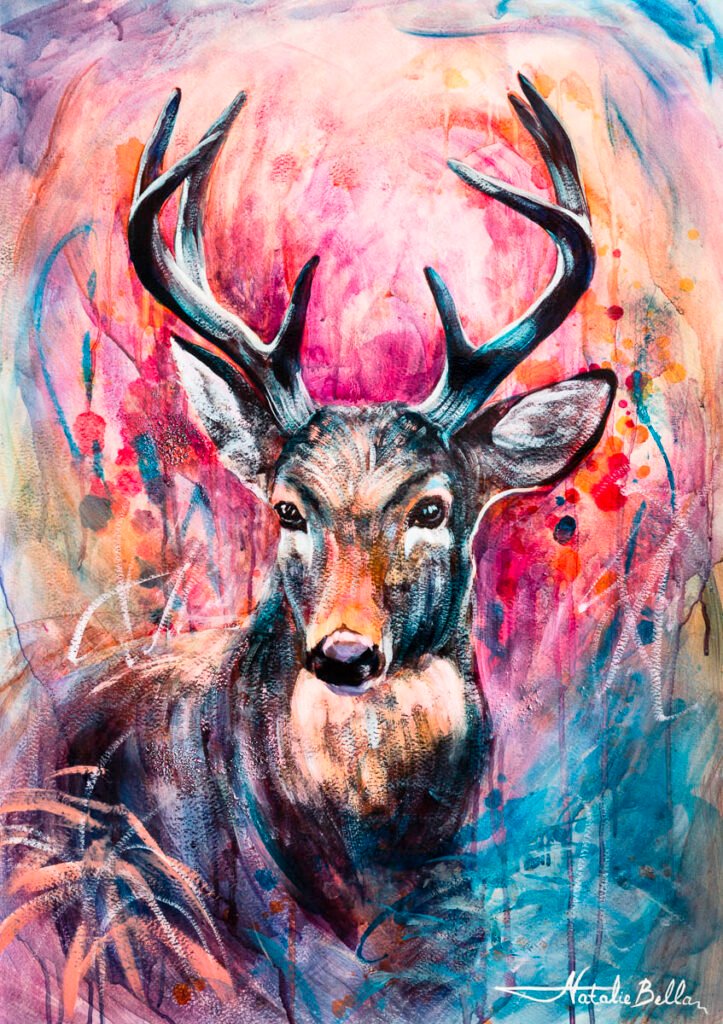
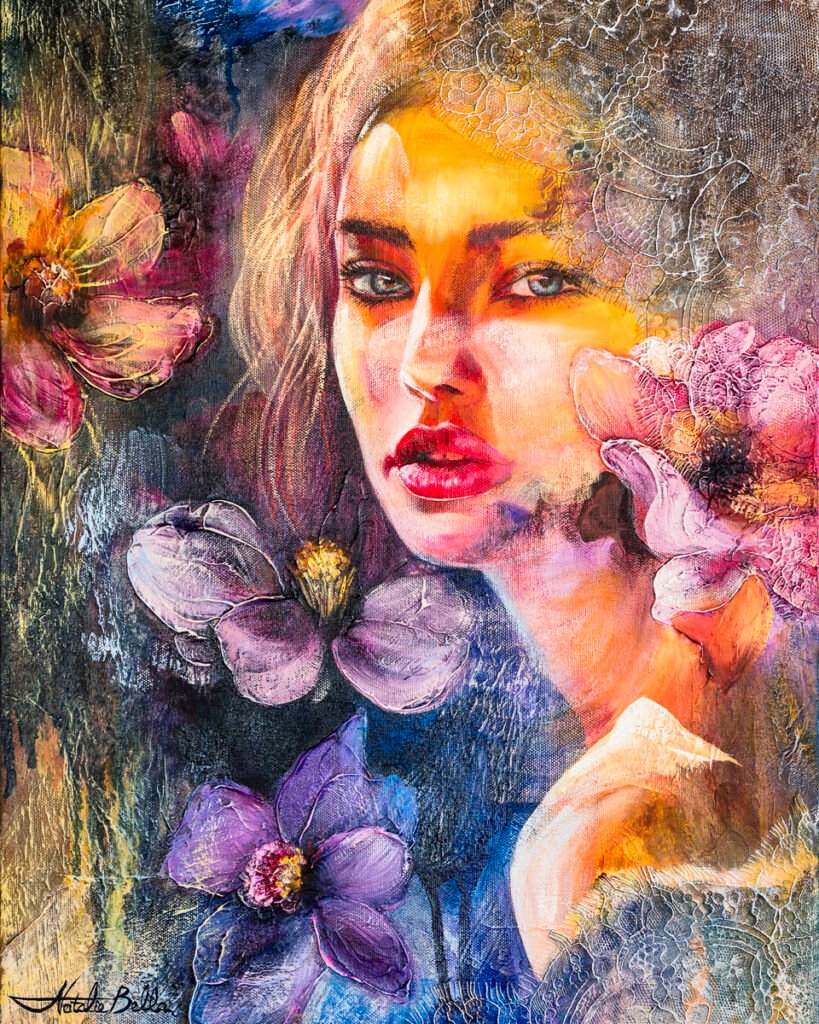
The reality: this year I completed about ten pieces I’m proud of, along with many more studies and failed paintings that will never see the light of day. I learned basic drawing skills, oil painting, mixed media. I’m building the foundation deliberately, not rushing.
Something I definitely didn’t expect: getting positive feedback and actually selling a few pieces.
I thought it would take years to reach that point. So when people approached me wanting to buy my paintings, I was genuinely shocked.
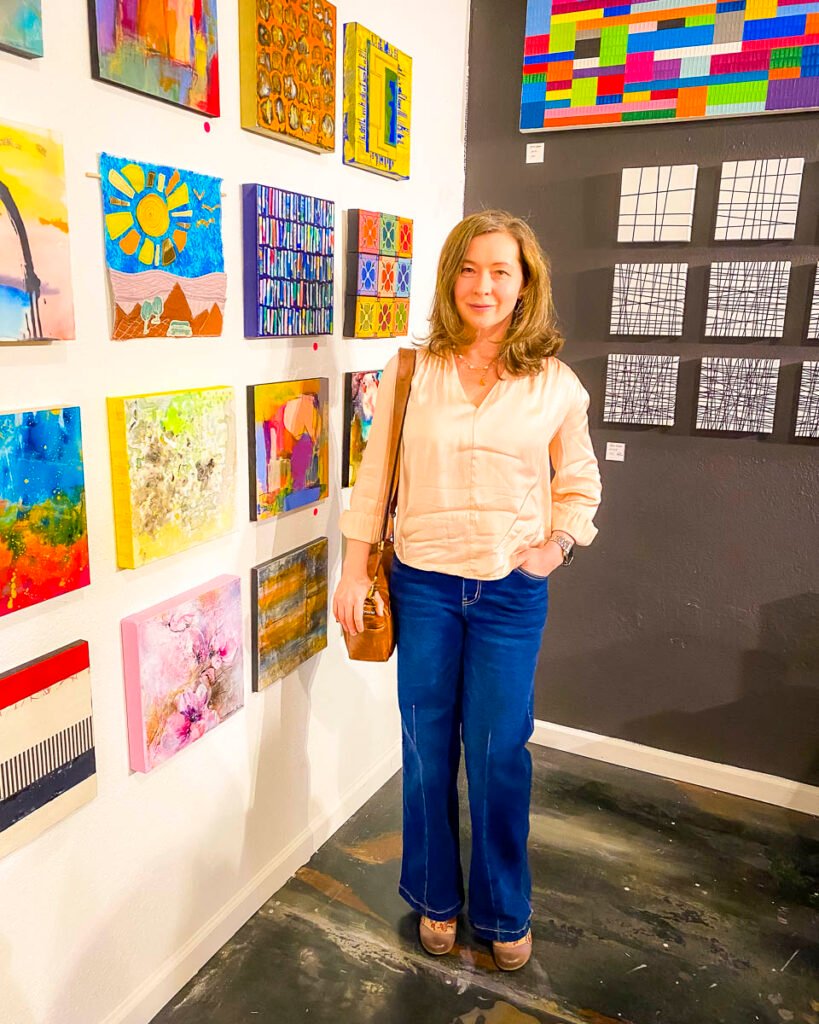
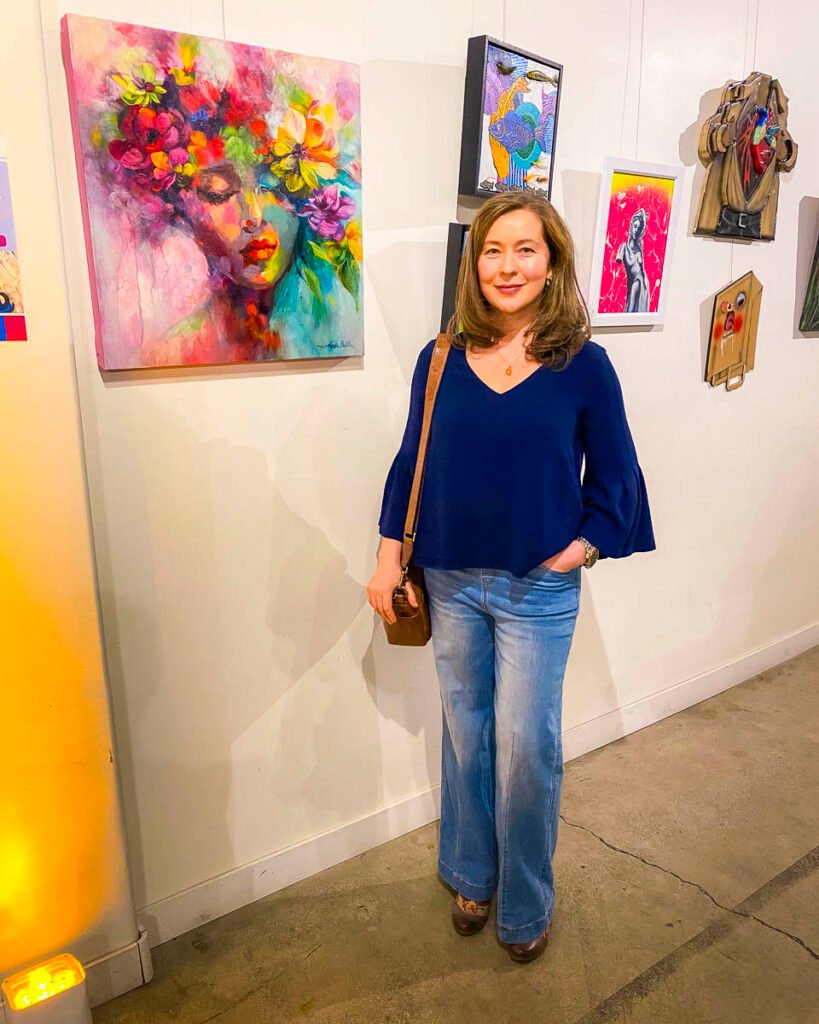
My work was accepted into two small Las Vegas art shows, and one of my favorite paintings sold at one of them. Hearing feedback from collectors and fellow artists was amazing – and surprising. I wasn’t expecting people to love my work, especially strangers.
Showing my work still isn’t my top priority – I’m working through my curriculum, focused on learning – but this early validation was a major milestone. It helped solidify my identity as an artist when I was still doubting whether I could call myself that.
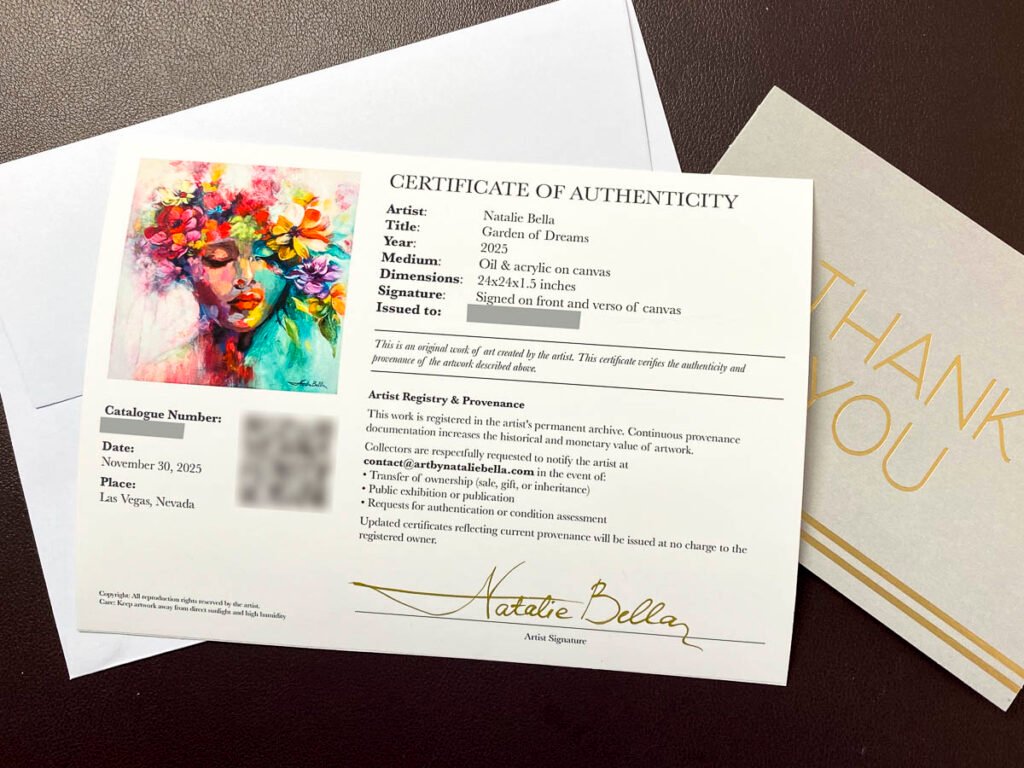
Let me be honest about the financial reality.
My art barely covers the cost of supplies. It may take a few years before it generates considerable income. The wall art business isn’t a huge income source either, but it at least generates some return on time invested – it’s more immediate than fine art sales.
I’m not naive about sustainability. I’m actively thinking about it. But I’m also not going to pretend I have it figured out.
There’s a balance I’m learning to hold: honoring this as a genuine vocation while addressing practical needs. Learning about pricing, valuing my work, not apologizing for wanting to be paid. The starving artist stereotype is real and pervasive, and I’m working to dismantle it in my own thinking.
I don’t have the answers yet. But I’m not ignoring the question.
I’m an artist now. Not “aspiring,” not “amateur,” not “trying to be.” I create art. That makes me an artist.
Grief and creation can coexist. In fact, for me, they had to. The loss that broke me open also made space for something new to grow.
My right brain intuition is as trustworthy as my left brain logic. For decades I prioritized one over the other. Now I’m learning they work best together—the planner and the painter, the engineer and the artist.
I’m early in this journey, and that’s okay. The work I’m making now still matters. It doesn’t have to be my best work to be real work.
The creative skills I brought from my previous life aren’t a distraction from “real” art – they’re part of my artistic practice. The photography, the Photoshop, the technical knowledge. They’re not cheating. They’re tools.
This coming year isn’t about shows or sales or proving anything.
2026 is about going from “still learning” to having a portfolio-ready body of work. It’s about:
I’m playing the long game, not chasing quick wins. I want to build something sustainable, something real.
A year ago, I was selling wall art online and didn’t know this was coming.
Now I’m an artist. A creator. Someone committed to this path.
The transformation that grief and courage made possible – I wouldn’t have chosen it. But I also wouldn’t undo it.
This was the year I became who I was supposed to be all along.